

Menopause x Domestic Violence: Navigating the Overlap
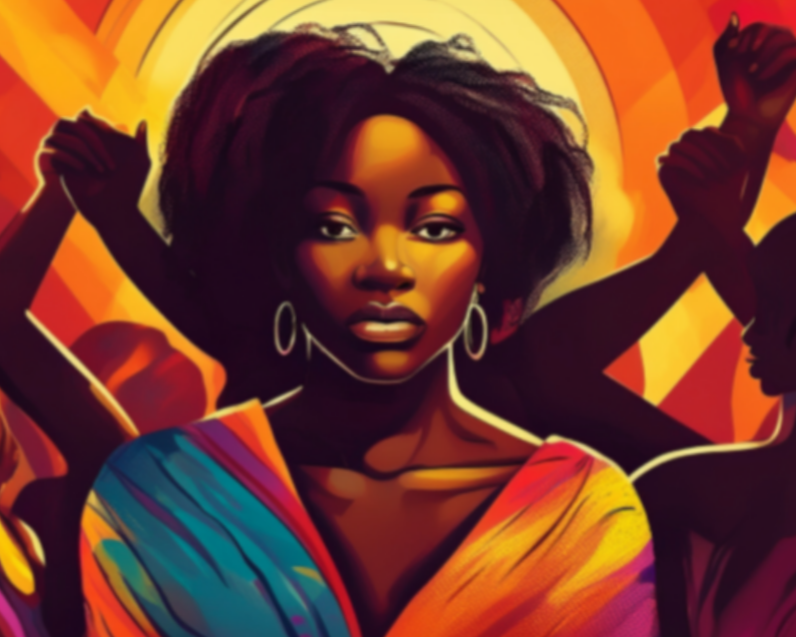
by Tanya “Ami” Upshur, PAUSE, Pleasure & Peace: Decolonizing Celibacy
October 8, 2025 (6 min. read)
October is Domestic Violence and Menopause Awareness Month. As a survivor of domestic violence and someone who’s drifting between peri-menopause and menopause, counting “period no-shows”, once again, I can relate to the complexity of navigating both.
Menopause is a natural phase in every body with a uterus, usually between the ages of forty and seventy (yes, seventy - I know people). The point is: menopause is under‑studied by medical researchers and all too often overlooked by patients and practitioners. While menopause does not discriminate, its experience can differ profoundly from one person to another and across racial and cultural groups. It can also occur early in life, especially for women who have had a hysterectomy or other surgeries.
Due to higher rates of uterine fibroids among Black women and systemic issues like limited access to specialized care and healthcare discrimination, Black women in the U.S. are more than twice as likely as white women to undergo a total hysterectomy, which is the surgical removal of both the uterus and ovaries. This procedure initiates “surgical menopause,” which can accelerate the onset and intensity of menopause symptoms at any age.
Often, menopause is overshadowed by other health conditions, including trauma from domestic violence, which is not taken seriously enough, either, and disproportionately impacts Black and Indigenous people in the U.S., especially women and girls. So we have to talk about it!
In my early forties, I developed massive fibroids that made me appear five to six months pregnant, disrupting my menstrual cycle. There are a myriad of possible explanations for the fibroids—from spirituality (soul ties) to genetics (your mother had fibroids, so…) to toxic hair‑care products (perms and relaxers…It’s hard out here for a Black Empress)—but that’s a whole other conversation.
The fibroids were uncomfortable, but they didn’t cause debilitating pain, so I decided against a hysterectomy, which was the only option offered by the medical practitioners I consulted. I chose to wait, knowing that as I aged and estrogen and other hormone levels shifted and plummeted, the fibroids would likely shrink, and they did.
I elaborate on this in my YouTube video Ride and Rant, which I must rename because I really don’t rant. Maybe I’ll call it Ride and Release. We’ll see. Anyway, check it out.
I lived with fibroids for years, caring for myself primarily through my diet. Already vegan, I avoided gluten, dairy, and soy, drank a lot of water, consumed alcohol occasionally, danced, practiced yoga, stretched, walked, massaged my lower abdomen, and gave myself vaginal or yoni steams and salt-water cleanses now and then, but not more than four times per year.
Outside of the context of relief from fibroids, menopause, or peri-menopause, or rather the decrease in estrogen and other hormones, never crossed my mind as a possible reason for any health concerns. Why would it? The mood swings, heart palpitations, and the irregular, often light menstrual cycles I experienced already had explanations - trauma and fibroids, at least that’s what I thought.
I believed I had plenty of time before menopause would come knocking. I was vibrant—certainly not prudish or “prunish”—and patient, but I definitely wasn’t ready to face hot flashes, battle dry eyes (or dryness of any kind), or fade into the background—where so many menopause conversations seem to happen. I’d hear older women say, “I’m flashing,” and then… not much else. Not maliciously, just in that older-ladies-you’ll-get-there rite‑of‑passage kind of way.
Shame—a reflex born of living in a culture that makes one thing painfully clear: all hell breaks loose if a woman dares to embrace and share the joy of no longer being fertile, whether by choice, circumstance, or biology. Never really wanting kids in the first place, speaking openly about “private parts,” and daring to complain about discomfort can all invite judgment and dismissal. Infertility was never the milestone I was anticipating. It was the unexpected benefits for me: a flatter stomach, painless sex, and more room for my bladder. That was where my attention landed—on the perks.
There is an array of symptoms—or signals—that announce peri-menopause and menopause, clamoring for our attention: night sweats, weight gain, weight loss, heart palpitations, muscle aches, UTIs, painful intercourse, irregular periods, irritability, anxiety, depression, insomnia, mood swings, brain fog, difficulty concentrating, memory loss, and cold or hot flashes (or "flushes," as some call them, since they don’t always come on or subside quickly). These symptoms often overlap with those of other conditions and can be easily overlooked while we’re simply trying to live our lives.
We're told to hide, loathe, and deny everything that comes with aging, except for birthday parties and anti-aging cream. Menopause can be debilitating, but I embrace it. I was born with a uterus, ovaries, and all the things; it is a part of my journey. I’m grateful to be here alchemizing whatever life has for me. Sometimes, levity helps.
When domestic violence and menopause overlap, they pose a unique set of challenges that require a comprehensive approach to care. Menopause-related symptoms are often treated separately, without considering whether past or ongoing abuse might be affecting an individual’s overall health.
In my late teens and again in my thirties, I experienced domestic violence. The episodes were quite different, but the lesson I carry most is: don’t rate violence. Violence is violence. Some may say, “Oh, you’re too sensitive.” My response is that everything—thoughts, words, and actions—has power. Violent speech and threats are just as harmful as a punch; denying someone basic needs, including connection, community, and access to life‑sustaining resources, is just as damaging as a kick.
So, let’s say it together:
Never rate the violence.
Accept it for what it is.
The intent is always the same: to dominate and diminish another person.
Trauma survivors going through menopause may face greater emotional volatility due to the combined biological effects of aging and the lingering psychological effects of abuse. People in this situation may be more vulnerable to depression and anxiety, and their cognitive functions (memory, focus, etc.) may be impaired, making it harder to advocate for themselves, even during medical appointments. I can attest to being far more anxious when I was unaware of what was happening inside my body.
What Can Be Done?
Accept & Prepare
From the moment people with uteruses are born, we’re on a trajectory that likely includes menopause, and along the way, we’ll have many other experiences that may impact our well-being. We must live our lives as though menopause will undoubtedly happen, asking questions and researching, talking to family, friends and community members about menopause, eating and drinking like our lives depend on it, keeping a food journal, moving our bodies, mapping our emotions, and giving ourselves space to process major events, whether through meditation, writing, therapy, or in community.
Share Our Stories
Whether through support groups, mental health counseling, or healthcare advocacy, empowerment lies in taking control of our health narratives. I know that every time we share our experiences, we help someone else. Whenever I hear a woman talk about a symptom, I look it up, learn more, and often gain new insight. Stories build community and inspire us.
Advocate for and Create Spaces for Healing
Our stories, shared in safe spaces or through platforms like social media, help raise awareness and support one another in ways that traditional medical systems may not. We must continue advocating for culturally sensitive healthcare and creating spaces of our own that acknowledge the intersectionality of trauma and aging, including in the context of racism and sexism.
Domestic Violence and Menopause Screenings
Understanding the overlap between menopause and domestic violence highlights the need for a holistic approach to health. While menopause is a natural phase of life, its impact is magnified for those who have experienced trauma. By acknowledging both, we can create more compassionate, comprehensive care for everyone and empower those navigating these challenges to prioritize their well-being without shame or silence.
The fact that menopause is so under-discussed adds to its complexity. For some people, menopause can come early, especially for those who have had a hysterectomy or other surgeries. Nonetheless, it is still a topic rarely discussed, whether in medical circles or in public discourse. Healthcare systems tend to overlook menopause, focusing primarily on symptoms and other conditions without considering that a patient might be experiencing this natural phase of life.
Most of us will be in situations where we will not have access to information, and others who are not experiencing it might not even bring it up. Some doctors are not necessarily well-versed on the topic and might focus solely on symptoms and other conditions without consideration for the likelihood that a patient might be going through menopause. It's not malicious; it's just not on the radar in almost all medical and health disciplines.
Here are a few resources I found helpful:
Masterclass: The Magic of Menopause
Experiences are shared from a variety of perspectives
Documentary format
Explains what happens during a hot flash
Girl Gone Strong
Reminds us of the importance of exercise, especially strength-training, during this phase of life.
Encourages peer-to-peer support.
For levity and community, check out Confessions of a Menopausal Femme Fatal, a stand-up comedy performance, and Miracle Workers: “A portrait series of Domestic Violence Survivors. You can click on the images below and watch now.
Wishing you health, courage, and care,
Ami
Your friend in Black, Uteruses, and Beyond

